
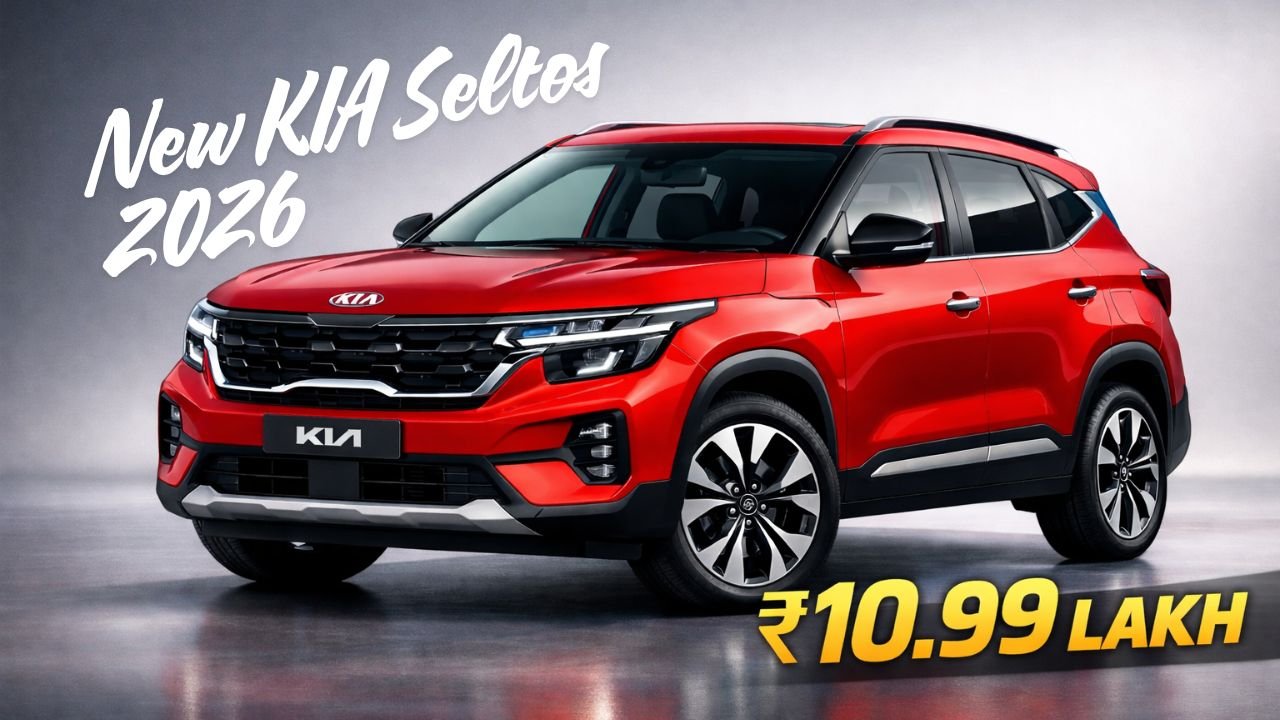
The 2026 Kia Seltos represents a substantial generational leap for Kia’s best-selling compact SUV in India. Built on the advanced K3 platform, the second-generation model delivers increased dimensions, enhanced premium positioning, and a feature set that challenges vehicles in higher segments. With prices ranging from ₹10.99 lakh to ₹19.99 lakh (ex-showroom), Kia has strategically positioned the Seltos to compete across multiple powertrain configurations while maintaining its value proposition against established rivals.
Pricing Strategy and Variant Structure
Kia has implemented a complex eight-variant strategy (HTE, HTE(O), HTK, HTK(O), HTX, HTX(A), GTX, and X-Line) spanning three distinct powertrains, creating a price ladder that accommodates diverse buyer preferences and budgets. The entry-level HTE petrol manual starts at ₹10.99 lakh, while the flagship GTX(A) turbo-petrol DCT and diesel automatic variants peak at ₹19.99 lakh.
Price Matrix by Powertrain
The pricing architecture reveals distinct positioning strategies for each engine configuration:
| Variant | NA Petrol | Turbo Petrol | Diesel |
|---|---|---|---|
| HTE | ₹10.99L (MT) | – | ₹12.59L (MT) |
| HTE(O) | ₹12.09L (MT) | – | ₹13.69L (MT) |
| HTK | ₹13.09L (MT) | – | ₹14.69L (MT) |
| HTK(O) | ₹14.19L (MT) | ₹16.29L (DCT) | ₹15.79L (MT) |
| HTX | ₹15.59L (MT) | ₹17.69L (DCT) | ₹17.19L (MT) |
| HTX(A) | ₹16.69L (MT) | ₹18.79L (DCT) | ₹18.29L (MT) |
| GTX/X-Line | ₹18.39L (CVT) | ₹19.19L-₹19.99L (DCT) | ₹19.79L-₹19.99L (AT) |
Prices in lakh, ex-showroom pan-India
This granular segmentation allows Kia to capture buyers from the ₹11 lakh entry-level segment up to the ₹20 lakh premium compact SUV space, directly competing with the Hyundai Creta, Tata Harrier, Maruti Suzuki Grand Vitara, and Volkswagen Taigun.
Powertrain Portfolio: Three Distinct Personalities
The 2026 Seltos retains its predecessor’s three-engine lineup but integrates them with the stiffer K3 platform, improving refinement and driving dynamics across all variants.
1.5-litre Naturally Aspirated Petrol (SmartStream G1.5)
- Output: 113-115 PS @ 6,300 rpm, 144 Nm @ 4,500 rpm
- Transmission: 6-speed manual or CVT automatic
- Efficiency: Claimed 17-18 kmpl
- Target Buyer: Budget-conscious families prioritising reliability and low running costs over performance
1.5-litre Turbo-Petrol (SmartStream G1.5 T-GDi)
- Output: 158-160 PS @ 5,500 rpm, 253 Nm @ 1,500-3,500 rpm
- Transmission: 6-speed iMT (clutchless manual) or 7-speed DCT
- Performance: 0-100 kmph in under 9 seconds
- Efficiency: 16-17 kmpl
- Target Buyer: Enthusiasts seeking segment-leading performance without compromising practicality
1.5-litre CRDi VGT Diesel
- Output: 114-116 PS @ 4,000 rpm, 250 Nm @ 1,500-2,750 rpm
- Transmission: 6-speed manual or 6-speed torque converter automatic
- Efficiency: Class-leading 20-22 kmpl
- Target Buyer: Highway commuters and buyers in diesel-dependent markets requiring maximum fuel economy
The turbo-petrol emerges as the performance flagship, delivering 158 bhp that surpasses most competitors except the Volkswagen Taigun 1.5 TSI (150 PS) and matches the Skoda Kushaq’s output. The diesel’s 250 Nm torque provides excellent mid-range punch for overtaking, while the NA petrol offers the lowest cost of entry.
Design Evolution: From Crossover to Proper SUV
The 2026 Seltos abandons its predecessor’s crossover stance for a more conventional SUV silhouette. Dimensions have grown significantly: length increases by approximately 95mm to 4,460mm, with proportional increases in wheelbase and width, while overall height reduces slightly for a sportier profile.
Exterior Styling Highlights
- Digital Tiger Face: A bolder interpretation of Kia’s signature grille with integrated Star Map LED daytime running lights
- Connected Lighting: Star Map LED taillamps create a distinctive light signature, while hidden rear wipers maintain clean lines
- Aerodynamic Details: Streamline door handles (automatic variants) and redesigned 18-inch alloy wheels improve airflow
- Colour Palette: 12 options, including four new additions, with X-Line variants receiving exclusive dual-tone treatments
The design shift addresses a key criticism of the previous model—its car-like proportions—while maintaining the urban-friendly dimensions that made it popular.
Interior and Technology: Trinity Display Defines Premium Ambition
The cabin transformation centres on Kia’s “Trinity Display” architecture: a 12.3-inch touchscreen, 12.3-inch digital instrument cluster, and 5.0-inch HVAC control screen combining for approximately 30 inches of display real estate. This setup, shared with the Kia Syros, positions the Seltos at the technology forefront of its segment.
Key Interior Features
- Panoramic Sunroof: Dual-pane design enhances cabin airiness
- Seating: 10-way powered driver seat with memory, ventilation (automatic variants), and integrated rear seat controls allowing passengers to slide the front passenger seat forward
- Premium Audio: 8-speaker Bose sound system
- Connectivity: Wireless Apple CarPlay/Android Auto, OTA software updates, and Kia’s connected car platform with 91 functions
- Ambient Lighting: Multi-colour system enhances night-time cabin ambience
- Boot Space: 447 litres, expandable to over 1,200 litres with 60:40 split rear seats
Material quality shows significant improvement over the outgoing model, with minimal panel gaps and textured surfaces reducing the perception of hard plastics. However, some soft-touch materials remain absent in lower-touch points, a compromise at this price point.
Safety and ADAS: Level 2+ Autonomy
Kia has equipped the 2026 Seltos with a comprehensive safety suite that achieves Level 2+ ADAS capability through 21 autonomous features.
Standard Safety Equipment
- Airbags: Six airbags across all variants
- Structural: New K3 platform with improved torsional rigidity
- Crash Prevention: Forward Collision Warning, Blind Spot Collision Avoidance Assist, Rear Cross Traffic Collision Avoidance Assist
- Stability: Electronic Stability Control, Hill Assist Control, Hill Descent Control, Vehicle Stability Management
ADAS Features
- Adaptive Cruise Control: Stop-and-go functionality (automatic variants)
- Lane Keeping: Lane Departure Warning, Lane Keep Assist, Lane Following Assist
- Parking Assistance: 360-degree camera, Blind View Monitor in instrument cluster, side parking sensors
- Driver Monitoring: Driver Attention Warning, Leading Vehicle Departure Alert
Notably, the Seltos has not yet undergone GNCAP or BNCAP testing, leaving its official safety rating pending. The ADAS calibration shows room for refinement, with lane-centring inputs feeling somewhat unnatural on uneven Indian roads.
Competitive Landscape and Market Positioning
The 2026 Seltos enters a fiercely contested segment where it must defend its market leadership against multiple challengers.
Key Rivals Comparison
| Model | Starting Price | Top Engine | USP |
|---|---|---|---|
| Hyundai Creta | ₹11 lakh | 1.5L Turbo (160 PS) | Brand value, ride quality |
| Tata Harrier | ₹15 lakh | 2.0L Diesel (170 PS) | Size, safety rating |
| Maruti Grand Vitara | ₹10.5 lakh | 1.5L Hybrid (116 PS) | Fuel efficiency, reliability |
| VW Taigun | ₹11.5 lakh | 1.5L TSI (150 PS) | Driving dynamics, European feel |
| 2026 Kia Seltos | ₹10.99 lakh | 1.5L Turbo (158 PS) | Features, performance, variety |
Prices approximate ex-showroom
The Seltos maintains its competitive edge through powertrain diversity—offering diesel when many competitors have abandoned it—and technology leadership with the Trinity Display and comprehensive ADAS. However, the Tata Harrier offers superior size and presence, while the Grand Vitara provides strong hybrid efficiency.
Ride Quality and Driving Dynamics
Early reviews indicate the K3 platform delivers noticeable improvements in ride comfort and high-speed stability. The suspension tuning prioritises comfort, effectively absorbing potholes and irregular surfaces common on Indian roads. Body roll remains controlled despite the comfort-oriented setup, and the steering provides adequate feedback for the segment.
The turbo-petrol DCT combination offers quick acceleration and responsive overtaking performance, though enthusiastic drivers may find the naturally aspirated petrol variants underpowered for fully loaded highway cruising. The diesel automatic provides the best balance of performance and efficiency for long-distance travel.
Market Outlook and Verdict
The 2026 Kia Seltos successfully evolves its formula by addressing key weaknesses while amplifying strengths. The transformation from crossover to proper SUV enhances road presence, the interior tech suite establishes new segment benchmarks, and the powertrain portfolio covers virtually every buyer’s need.
However, several considerations emerge:
- Pricing: Top-end variants approaching ₹20 lakh face pressure from larger SUVs like the Tata Harrier and MG Hector
- Safety Certification: Pending crash test results may impact perception despite comprehensive equipment
- ADAS Refinement: Lane-centring behaviour requires further calibration for Indian road conditions
For content creators targeting Indian automotive audiences, the Seltos offers rich material across multiple angles: technology showcases, performance comparisons, variant walkthroughs, and long-term ownership prospects. The diesel option’s continued availability and the turbo-petrol’s performance credentials provide strong differentiation points against the Hyundai Creta, while the feature list enables compelling value propositions for digital marketing campaigns.
The 2026 Seltos is neither a revolution nor a mere evolution—it represents a calculated, comprehensive upgrade that should maintain Kia’s strong position in India’s compact SUV segment while attracting buyers seeking premium features at competitive prices.
Must Read: Tesla Brings Back Seven Seats: 2026 Model Y Gains Optional Third Row and Premium Upgrades
Reference Links:
1 thought on “2026 Kia Seltos Price Starts ₹10.99 Lakh – Full Variant List & EMI”